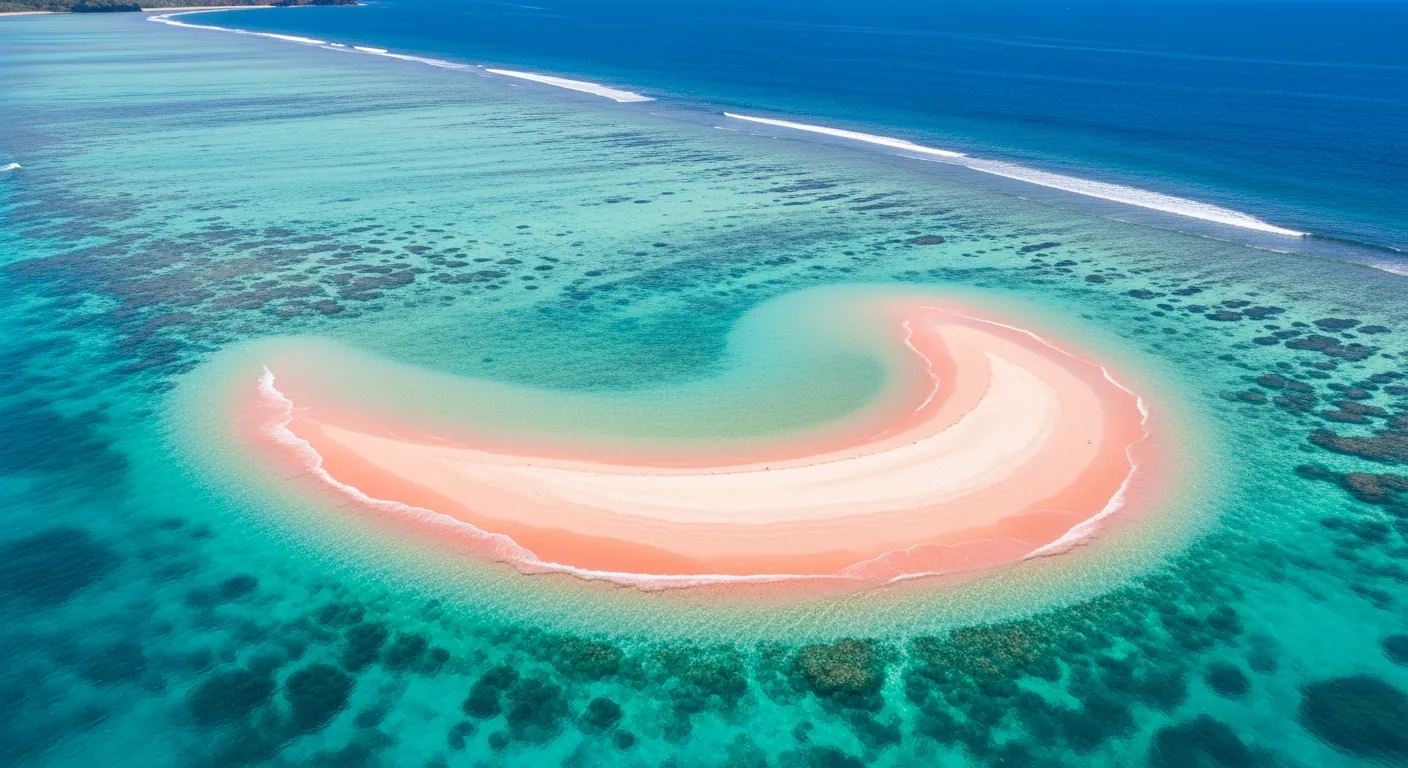
The waters off Komodo Island hold a transient landform, Taka Makassar. It is a slip of land, visible and then gone, a temporary canvas of pink sand against the turquoise. Above its surface, the air is still, the sun sharp. Below, a vibrant, shallow reef teems with marine life, a silent world beneath the shifting sand.
The Ephemeral Beauty of Taka Makassar
Taka Makassar exists as a fragile, crescent-shaped sandbar within the expansive Komodo National Park. Its most striking feature, the delicate pink hue of its sand, derives from microscopic red foraminifera organisms that mix with white calcium carbonate particles. This natural phenomenon creates a distinctive visual signature, setting it apart from typical white-sand beaches. Situated on the north side of Komodo Island, Taka Makassar lies in close proximity to the well-known Manta Point dive site, a convergence of currents that attracts large pelagic species. The sandbar itself is remarkably small, with an area less than that of a standard football field. Its visibility is dependent on the tidal cycle; Taka Makassar is only fully exposed at low tide, gradually submerging as the tide rises. This transient nature underscores its delicate ecosystem and highlights the importance of visiting during optimal conditions. Komodo National Park, which encompasses Taka Makassar, sprawls across approximately 1,817 km², with 603 km² designated as landmass. This vast protected area safeguards a diverse range of terrestrial and marine habitats. The shallow waters around Taka Makassar offer exceptional snorkeling opportunities, allowing visitors to observe coral formations and various fish species in a relatively calm environment. The sandbar serves as a tranquil interlude between more active snorkeling and diving excursions, providing a unique vantage point for appreciating the park’s natural grandeur. The precise location and transient nature of Taka Makassar make it a focal point for many Komodo itineraries.
The Science Behind Pink Sand
The pink coloration of Taka Makassar’s sand is a direct result of biological processes. Microscopic organisms, specifically red foraminifera, inhabit the coral reefs surrounding the sandbar. These single-celled organisms, when they die, leave behind their red shells, which are then broken down and mixed with the prevailing white sand, composed primarily of calcium carbonate from eroded coral and shells. The concentration of these red fragments, combined with the specific light conditions and water clarity, produces the characteristic soft pink glow. This process is not unique to Taka Makassar but is a rare occurrence globally, found in only a few select locations. The shallow, clear waters surrounding the sandbar facilitate the growth of the coral species that host these foraminifera, creating a continuous supply of the red particles. The dynamic interplay of ocean currents, wave action, and biological decomposition continuously replenishes and shapes the sandbar, maintaining its unique appearance. Understanding this natural process enhances appreciation for Taka Makassar’s distinct beauty, recognizing it as a product of a complex and vibrant marine ecosystem.
Navigating Komodo National Park: Accessing Taka Makassar
Access to Taka Makassar is primarily facilitated through boat tours originating from Labuan Bajo, the main gateway to Komodo National Park. Travellers have two primary options: day trips or multi-day liveaboard experiences. Day boat tours typically depart early morning from Labuan Bajo and include stops at several key locations within the park, such as Padar Island, Komodo Island (for dragon viewing), and Manta Point, in addition to Taka Makassar. These tours are offered from around USD 105 per person, a price point that generally includes lunch and transfers to and from accommodation in Labuan Bajo. The duration of a day trip allows for approximately 30-60 minutes at Taka Makassar, sufficient time for snorkeling the shallow reef and walking on the pink sand. The boats used for day trips range from traditional wooden phinisi vessels to speedboats, with speedboats offering quicker transit times between sites. The journey from Labuan Bajo to Taka Makassar can take between 2 to 3 hours by slower boat, or significantly less by speedboat, depending on sea conditions and specific boat speed.
Choosing Your Komodo Adventure: Day Trip vs. Liveaboard
For those seeking a more immersive experience, overnight Komodo boat tours provide extended access to the park’s offerings. These liveaboard trips typically start from about USD 215 per person for a 2-night stay on board, with prices varying based on boat comfort, itinerary, and duration. Liveaboards allow for multiple visits to sites like Taka Makassar, often at less crowded times, and offer opportunities for night snorkeling or diving, depending on the itinerary. A 2-night, 3-day itinerary is common, providing ample time to explore the diverse landscapes and underwater environments of Komodo National Park. The total area of Komodo National Park, including both land and sea, is approximately 1,817 km², offering vast exploration possibilities. Liveaboards often feature amenities such as private cabins, full board meals, and dedicated guides, enhancing the overall experience. The choice between a day trip and a liveaboard hinges on individual preferences for time, budget, and depth of exploration. Both options provide a viable means to witness the unique beauty of Taka Makassar and the surrounding Komodo National Park.
Snorkeling the Shallow Reefs of Taka Makassar
The primary draw of Taka Makassar, beyond its distinctive pink sand, is the exceptional snorkeling available in its surrounding shallow waters. The sandbar’s position within Komodo National Park ensures a rich and diverse marine ecosystem. The water here is typically crystal clear, providing excellent visibility for observing the vibrant coral gardens and a variety of fish species. Snorkelers can expect to encounter reef fish such as damselfish, angelfish, parrotfish, and clownfish, often sheltering within anemones. The reef structure around Taka Makassar is relatively healthy, with both hard and soft corals thriving in the sheltered, shallow environment. The depth of the water around the sandbar rarely exceeds a few meters, making it accessible for snorkelers of all experience levels, including families with children. The proximity to Manta Point, a known feeding ground for manta rays, occasionally means that juvenile rays or other pelagic species might venture into the shallower waters around Taka Makassar, offering an unexpected encounter.
Marine Biodiversity and Conservation Efforts
Komodo National Park, encompassing Taka Makassar, is a UNESCO World Heritage Site recognized for its outstanding universal value. The park’s marine area is particularly celebrated for its high biodiversity, supporting over 1,000 species of fish, 260 species of reef-building coral, and 14 species of whales, dolphins, and dugongs. Conservation efforts within the park are crucial for maintaining this delicate balance. Regulations govern fishing practices, waste management, and visitor conduct to minimize human impact on the environment. Visitors are encouraged to practice responsible tourism, avoiding contact with coral, refraining from touching marine life, and ensuring all waste is properly disposed of. The park’s total area of about 1,817 km², with 603 km² being land, underscores the scale of the protected zone. The shallow reefs of Taka Makassar are a vital component of this larger ecosystem, serving as nurseries for various marine species and contributing to the overall health of the Komodo waters. The continued protection of these habitats ensures that future generations can also experience the underwater wonders of Taka Makassar.
Manta Point: A Nearby Marvel
Manta Point, a renowned dive and snorkel site, lies in very close proximity to Taka Makassar, often included in the same Komodo National Park itineraries. This site is celebrated for its consistent encounters with manta rays, which frequent the area to feed on plankton carried by strong currents. While Taka Makassar offers a serene, shallow environment, Manta Point presents a more dynamic marine experience. The currents at Manta Point can be significant, making it more suitable for experienced snorkelers and divers, though some tour operators provide drift snorkeling opportunities for all levels. The mantas found here are typically reef mantas, with wingspans often exceeding 3 meters. Observing these majestic creatures gliding effortlessly through the water is a highlight for many visitors to Komodo National Park. The site’s ecological importance stems from its nutrient-rich waters, which support the dense plankton blooms that attract the mantas.
Synchronized Exploration: Taka Makassar and Manta Point
The strategic positioning of Taka Makassar and Manta Point allows for a logical and efficient itinerary for Komodo tours. A typical day trip from Labuan Bajo might involve an early morning departure, a stop at a viewpoint like Padar Island, followed by a visit to Komodo Island to see the Komodo dragons, and then a sequence of Taka Makassar and Manta Point. The transition from the calm, shallow waters of Taka Makassar, ideal for a leisurely swim and pink sand exploration, to the more active environment of Manta Point for a chance to swim with mantas, creates a balanced and diverse experience. Day boat tours from Labuan Bajo, priced from around USD 105 per person including lunch and transfers, frequently incorporate both locations. Similarly, overnight Komodo boat tours, starting from about USD 215 per person for a 2-night stay, offer the flexibility to visit these sites multiple times or at different times of day, potentially increasing the chances of significant wildlife encounters. The combination of these two distinct sites provides a comprehensive overview of Komodo National Park’s diverse attractions.
Planning Your Visit to Taka Makassar from Labuan Bajo
Labuan Bajo serves as the logistical hub for all Komodo National Park expeditions, including visits to Taka Makassar. The town, located on the western tip of Flores Island, offers a range of accommodation options from budget guesthouses to luxury resorts, catering to diverse traveller needs. Before embarking on a Komodo tour, visitors should ensure they have adequate sun protection, including reef-safe sunscreen, hats, and rash guards, as the tropical sun is intense. Snorkeling gear is typically provided by tour operators, but individuals may prefer to bring their own for comfort and fit. It is advisable to book tours in advance, especially during peak season (July to August and December to January), to secure preferred dates and boat types. Reputable tour operators in Labuan Bajo adhere to park regulations and prioritize safety. The Komodo National Park entrance fee, which is separate from the tour cost, must also be considered; this fee contributes to the park’s conservation efforts and infrastructure maintenance.
Logistics and Best Practices for Komodo Trips
When selecting a tour, consider the size of the group, the type of boat, and the specific itinerary. Smaller group tours often offer a more personalized experience, while larger boats may provide more amenities. Day trips, starting from around USD 105 per person, are efficient for those with limited time, covering key highlights like Taka Makassar and Manta Point. For those with more flexibility, overnight Komodo boat tours, beginning from about USD 215 per person for a 2-night stay, allow for a more relaxed pace and deeper exploration of the park’s 1,817 km² area. Checking weather forecasts is prudent, as sea conditions can affect travel times and the accessibility of certain sites. Respect for the environment and local culture is paramount; always follow guides’ instructions and adhere to park rules, such as not littering and maintaining a respectful distance from wildlife. Ensuring adequate travel insurance is also recommended for all international visitors.
Discover the unique allure of Taka Makassar and plan your comprehensive Komodo National Park adventure. Explore further insights and detailed itineraries at takamakassar.com.
[1]
[2]
[5]